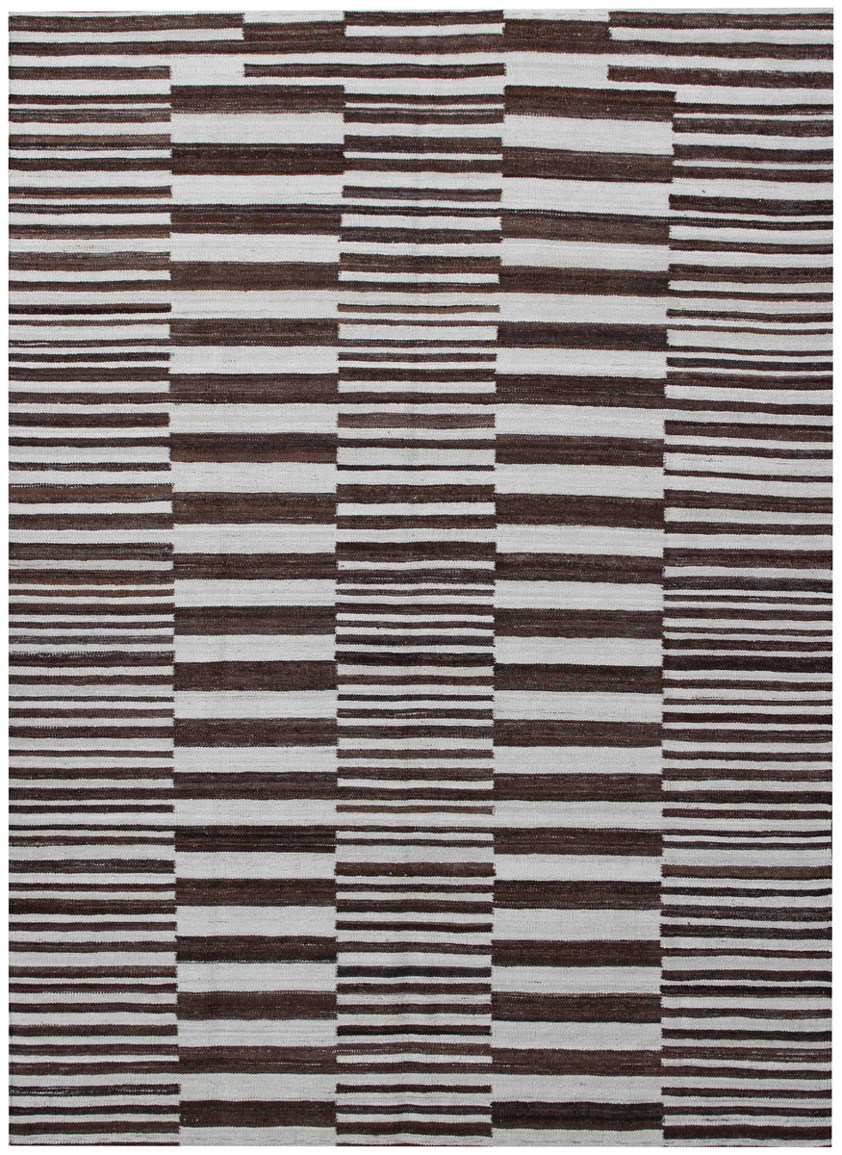
Brown and ivory are enough to give this rug a lively, shifting pattern. Short horizontal bars are arranged in vertical columns, with their spacing and length changing as they descend. Some sections are closely striped; others open into broader ivory intervals. The resulting rhythm is orderly at first glance but becomes more irregular as the eye follows the lines through the field. This contemporary Afghan kilim measures 243 × 179 cm, a useful size for a seating area that needs pattern within a limited palette. Its brown would connect easily with dark wood, while the pale intervals would answer cream upholstery or light painted walls.
The changing stripes have enough presence to hold a room together without asking for additional colours in the surrounding scheme. Kilim is part of Afghanistan’s wider culture of geometric household textiles. Historic rugs and bags demonstrate the versatility of repeated angular units, from intricate lozenges to simpler bands. This design reduces that language to line and interval, giving an established furnishing category a more pared back appearance.
The visible tonal grain in the brown softens the bars, preventing their edges from looking overly rigid. Because the arrangement has no separate medallion or dominant centre, a coffee table can sit across it while leaving the pattern recognisable around the sides. This rug would be particularly appealing alongside furniture with broad, plain surfaces, where the fine horizontal movement can provide the room’s more detailed texture.