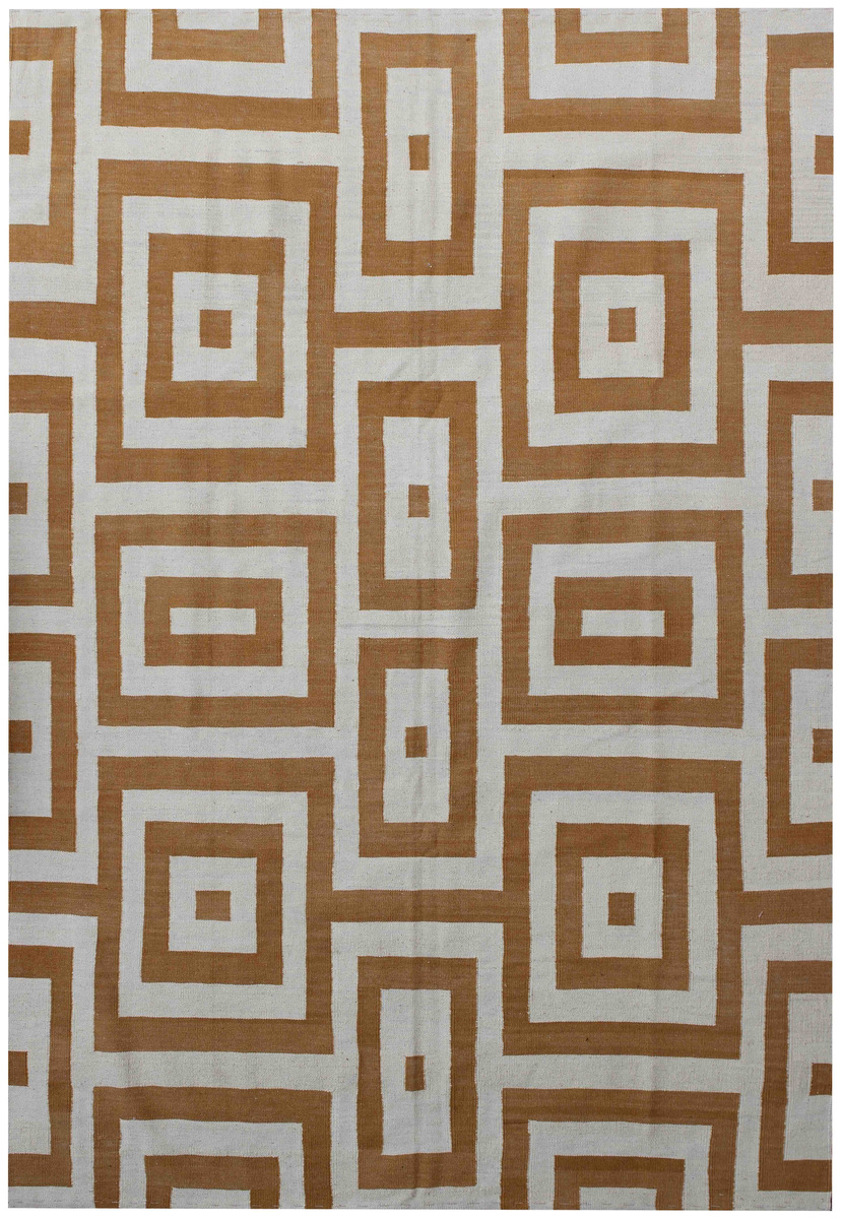
Broad ochre lines turn through right angles across this rug, enclosing pale rectangular compartments and small solid centres. The pattern moves in and out from the edges, creating an interlocking meander without a separate ornamental border. Ochre and warm ivory carry the whole composition, so the interest comes from proportion, direction and the spacing of the lines rather than a varied palette. At 292 × 200 cm, this contemporary Afghan kilim has the scale to establish a clear geometric foundation for a sitting area. Its rectilinear design would relate well to simple shelving, an angular sofa or a plain timber table.
Soft cream upholstery could echo the light spaces, while darker wood would add contrast to the ochre. Because the pattern continues across the field, furniture can overlap it without hiding a single indispensable centre. Afghan kilims belong to an extensive tradition of geometric household weaving. Historic examples use lozenges, stepped outlines and repeated units on both floor coverings and domestic bags; contemporary designs can explore the same concern with rhythm through a more reduced set of shapes.
Here the line itself becomes the principal ornament. Small tonal differences within the ochre lend the otherwise firm geometry a visible textile grain, tempering its architectural clarity. This rug would work particularly well where a room needs a strong pattern in a limited palette, with enough scale to be read around larger pieces of furniture.