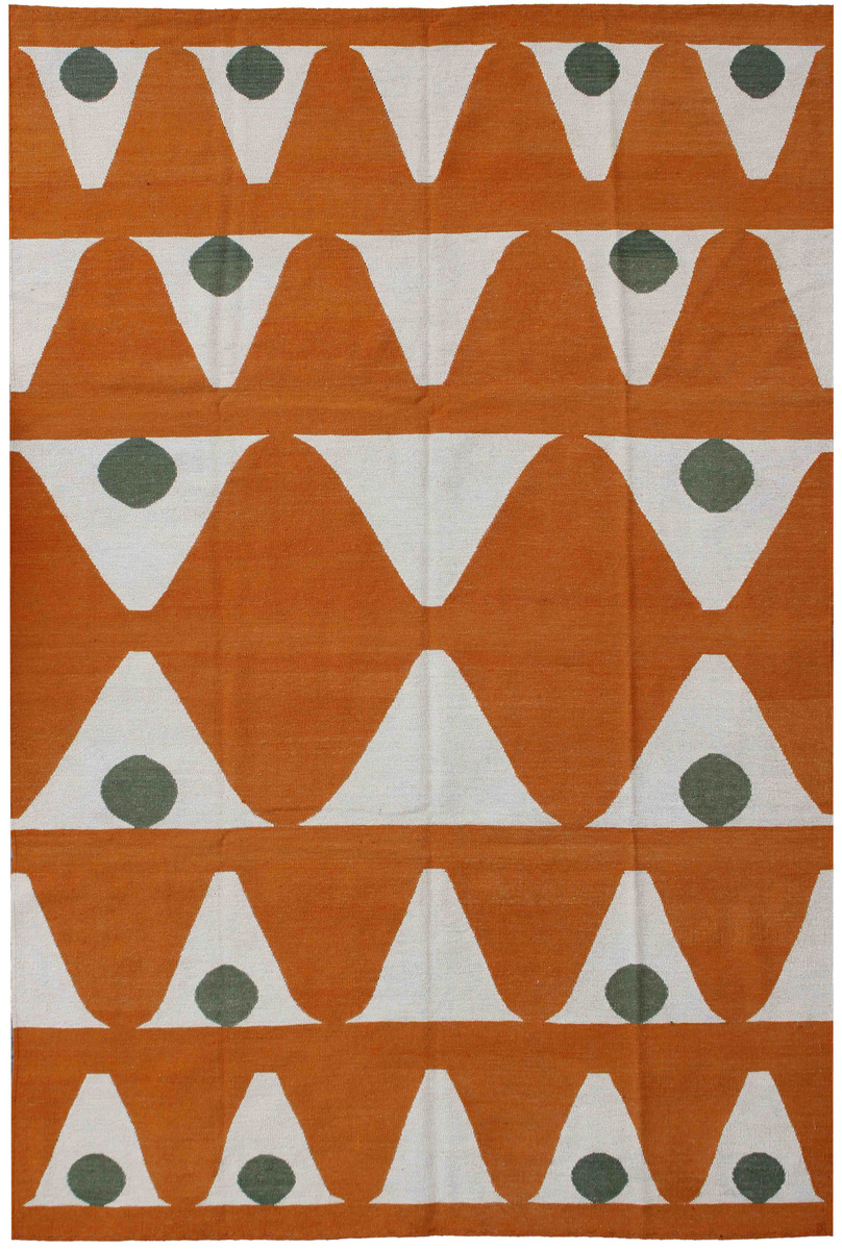
Orange graphic bands form the main structure of this contemporary Afghan kilim rug. Ivory triangular spaces alternate with rounded orange peaks, while muted green circles sit inside selected pale areas. The arrangement changes direction through the middle, giving the repeated shapes a subtle variation. No separate border interrupts the colour, so the broad pattern reaches directly to the edges.
At 300 × 200 cm, this rug would make a clear decorative foundation for a sitting area furnished with simple pieces. The orange could relate to warm wood and terracotta, while a green chair or cushion would pick up the small circles. Plain walls would give the large shapes room to register without adding another competing pattern. The scale is an important part of the design. From a distance, the orange and ivory read as interlocking fields; closer viewing reveals gentle tonal changes within the colour and small differences in the outlines.
The green circles supply a second level of detail, creating pauses within the stronger triangular rhythm. Afghan kilims belong to a broad regional history of flatwoven furnishings in which angular forms and repeated bands are fundamental design tools. Contemporary examples can greatly enlarge those elements and simplify their internal drawing. This rug uses that approach through a small vocabulary of peaks, triangles and discs, allowing colour and proportion to carry the main decorative interest across the whole floor area.