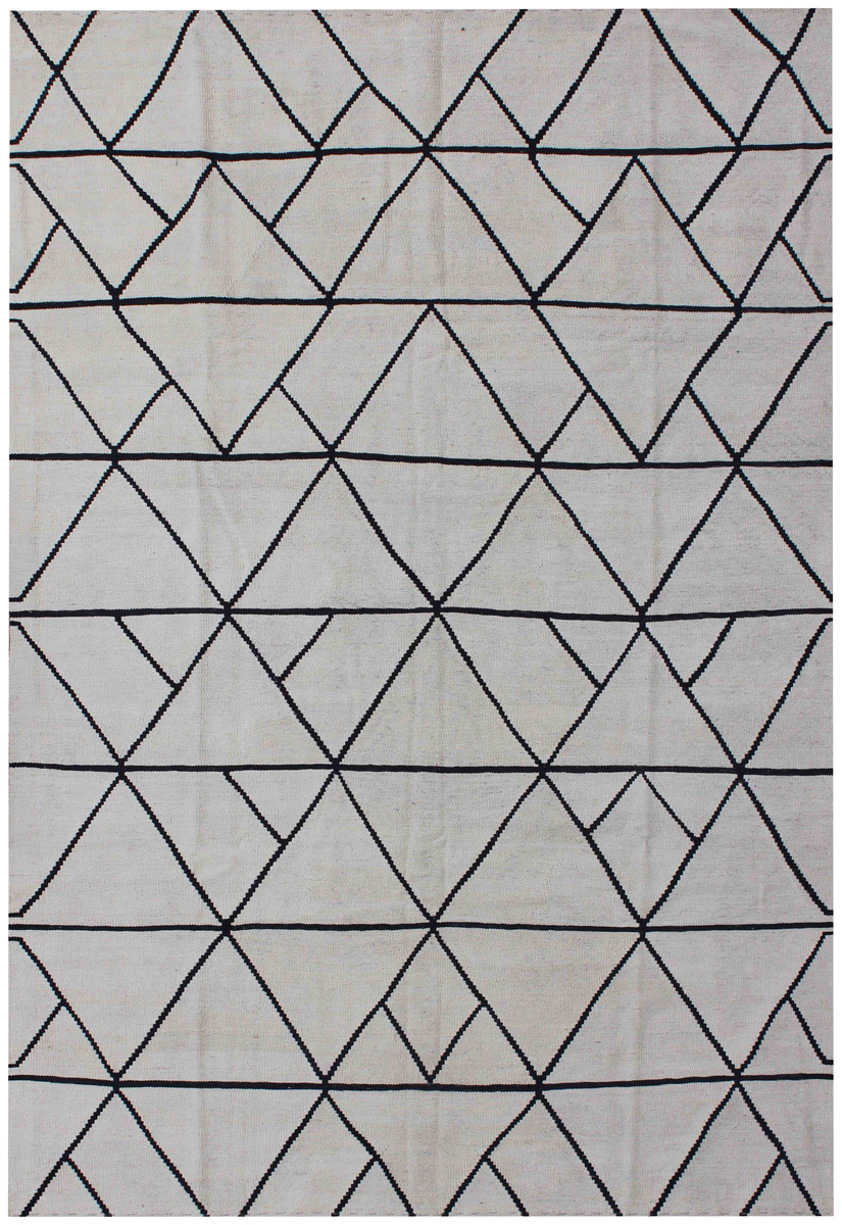
Black lines divide the pale field of this contemporary Afghan kilim rug into an open network of triangles. Horizontal strokes run across the width, meeting diagonal lines at irregular intervals. Some larger compartments contain an additional small diamond or angular subdivision. The drawing is spacious, with the pale ground occupying most of the surface. The lines vary slightly in direction and weight, giving the geometry a less rigid character than a perfectly uniform grid.
Larger triangles alternate with narrower ones, and the small internal shapes provide occasional points of emphasis. There is no broad surrounding border; the network reaches directly towards the edges, leaving the whole field visually connected. Kilim traditions in Afghanistan include many uses of repeated angular forms, from small detailed medallions to broad banded arrangements. Contemporary designs can reduce those elements to their outlines. This rug uses the line itself as the principal ornament, allowing pale space and changing proportions to carry as much interest as the dark marks.
Measuring 293 × 200 cm, it could provide definition beneath a simple seating group or in a bedroom with plain fabrics. Black metal details would echo the drawing, while light wood would soften the contrast. A substantial table could sit above part of the network without obscuring a single central feature. The open geometry would remain apparent around the furniture, giving the floor direction without introducing another strong colour.