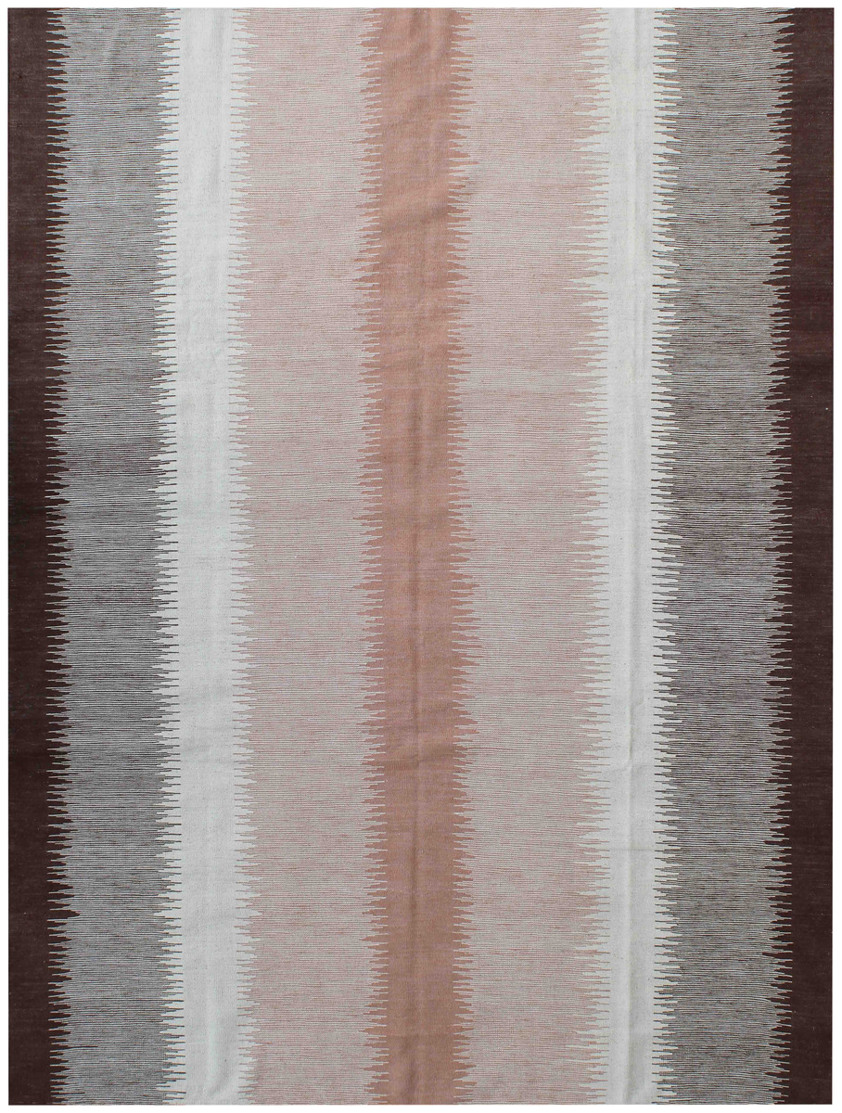
Blush pink runs through the centre of this generously sized rug. Taupe and ivory stripes sit beside it, with dark brown enclosing the outer sides. Fine horizontal strokes complicate every transition, extending a little way into the next colour. The palette remains quiet, but the changing stripe edges give the surface a closely worked character. The broad central passage has warmer peach and pink notes.
At either side, the grey-brown areas feel cooler, and ivory introduces narrow stretches of light. From farther away the bands appear almost architectural. Nearby, their outlines are much less regular, with numerous small lines interrupting the apparent certainty of each division.
A 345 × 259 cm format gives this rug enough breadth for a substantial seating group. Blush could connect with a pale fabric, while the dark brown sides would sit comfortably beside deeper timber. Plain furniture would allow the subtle stripe changes to remain visible. The design would also accommodate a larger central table, since its interest extends through the lengthwise bands rather than depending on one uncovered ornament. Geometric division has a broad history within Afghan flatweaving.
Bands can create order through proportion and colour alone, without requiring complex individual motifs. This contemporary Afghan kilim uses that economical design language in a softened palette. Its principal distinction lies in the relationship between the warm centre, pale interruptions and darker edges.