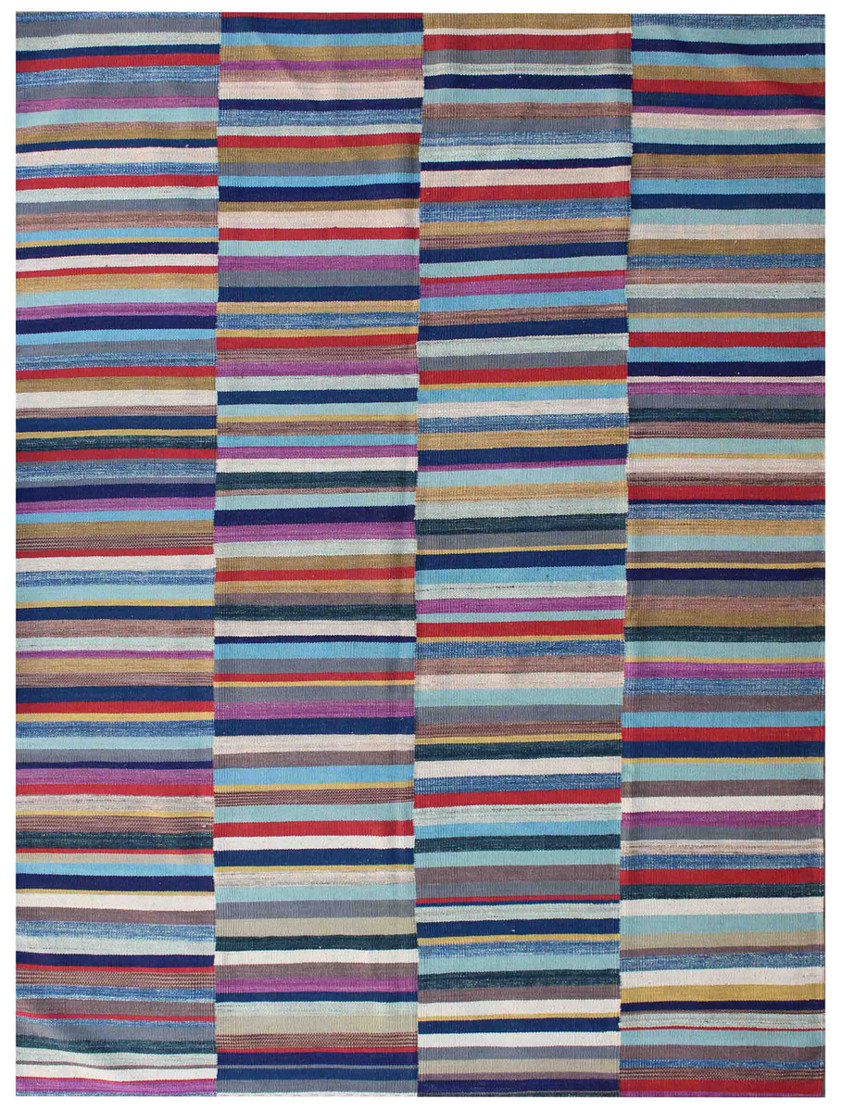
Four upright sections divide this rug into different sequences of coloured stripes. Blue, pink, red, cream, ochre and muted green alternate in bands of changing width, with darker lines keeping the brighter colours clearly separated. The stripes stop and restart at each section, creating a lively movement across the width as well as along the horizontal bands. This is a particularly colourful interpretation of a striped kilim. Pink and turquoise-blue passages give it brightness, while cream and darker neutral bands keep the arrangement balanced.
Some sections carry broader blocks of colour than their neighbours, so the surface avoids the mechanical effect of an identical repeat. Striping is a longstanding resource in flatwoven textile design, where interlacing coloured threads can establish both pattern and structure. Afghan kilims draw on that wider regional heritage. This contemporary rug expands the basic stripe into a panelled arrangement, allowing several colour sequences to work together within one clear rectangular field.
Measuring 299 × 198 cm, this rug would bring energy to an informal living room. Plain upholstery would give the many colours a calm surrounding surface, and a simple timber table would leave the panel changes visible around its edges. One quieter shade could be picked up in a curtain or chair fabric. The rug already supplies a complete palette, so it need not be accompanied by several additional patterned pieces. Its interest comes from the small adjustments between each band and its neighbours.