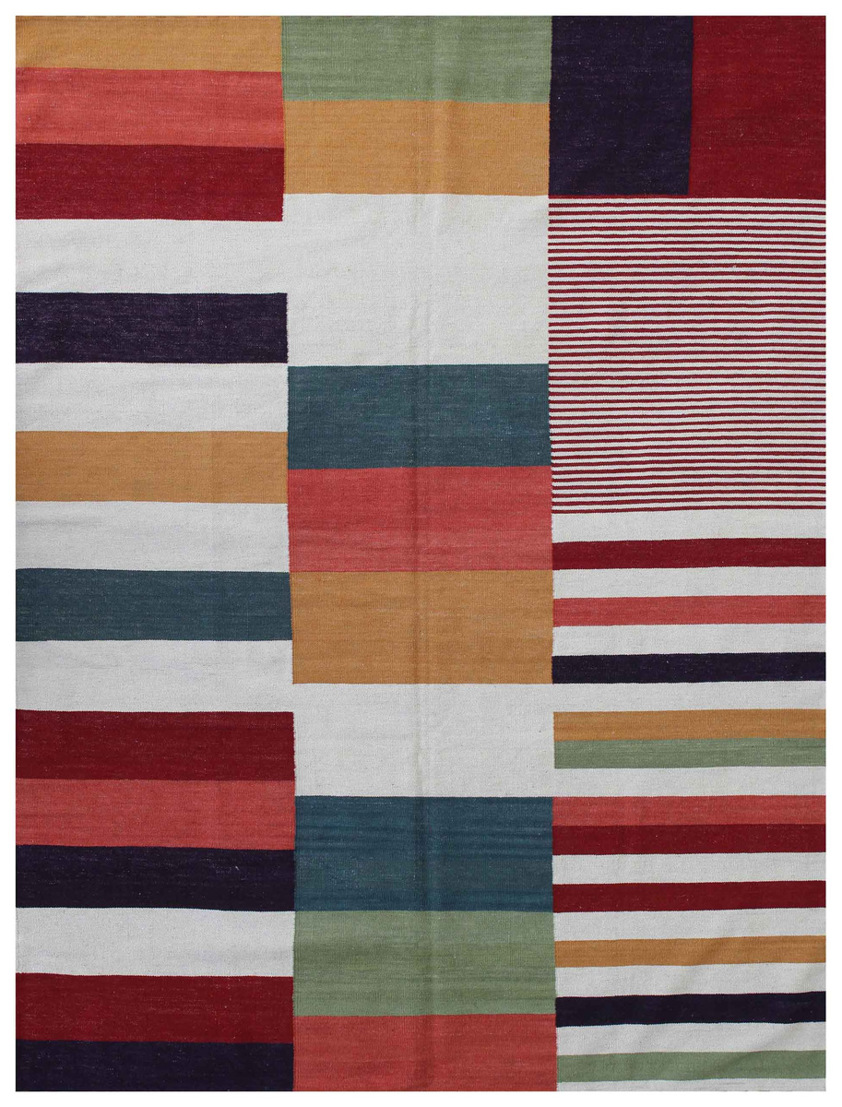
Broad rectangles and narrow stripes divide this rug into a carefully varied colour arrangement. Red, ochre, teal, pale green, ivory and deep purple sit in blocks of different widths, with a fine red-and-ivory striped panel near one side. Elsewhere, longer horizontal bands interrupt the larger shapes. There is no central medallion or separate patterned border: the meeting of colours establishes the design. The composition is particularly useful where a room needs colour without floral detail. At 290 × 200 cm, this rug could sit beneath a simple sofa group, with different areas of the block pattern visible around the furniture.
A plain table would provide a visual pause, while upholstery in one quieter shade could connect with the more restrained sections. Afghan kilims are part of a long regional flatweaving tradition. Colour can be organised directly through the interlaced structure, making stripes and geometric divisions a natural resource for design. This contemporary example extends that principle into an asymmetrical arrangement of broad panels and fine bands, giving familiar flatwoven colour relationships a distinctly graphic emphasis.
The ivory passages are important to the balance, separating warmer red and ochre from the deeper teal and purple. The small striped section introduces a different rhythm without adding another colour. Natural wood would suit the warm blocks, whereas dark metal furniture could echo the deepest tones. Its interest remains distributed throughout, so the design does not depend on keeping a single central ornament uncovered.