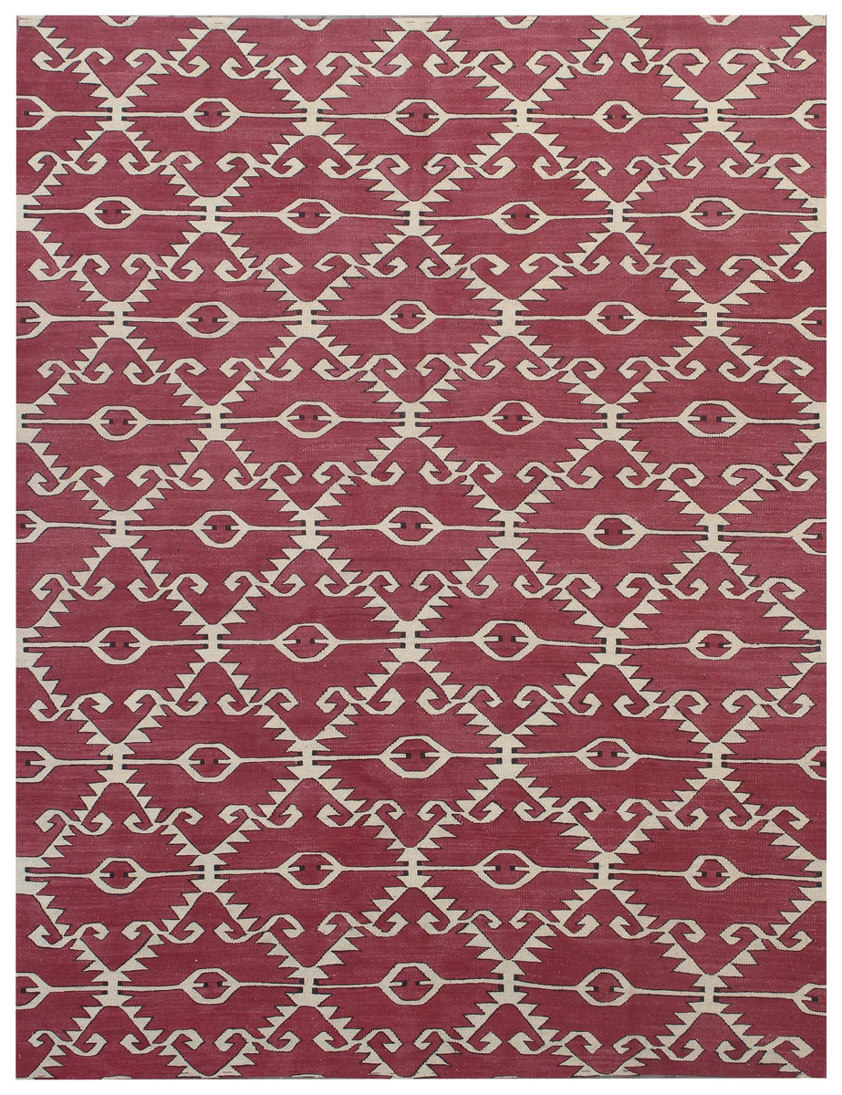
Ivory hooks and lozenges move across a red ground in this contemporary Afghan kilim rug. The motifs form broad horizontal rows, each linked by a fine line through its middle. Between the larger shapes, pointed ivory details create small changes of scale. The pattern reaches towards the edges without a separate, heavily ornamented border, allowing the contrast of red and ivory to remain the main decorative feature. Kilim is the term used for a flatwoven textile, with the pattern formed through the interlacing structure rather than a raised pile.
Across Afghanistan, flatwoven furnishings form part of a varied regional textile heritage, with angular drawing particularly suited to the medium. This rug uses that direct visual language in an unusually bold, uncluttered arrangement. The repeated motifs make the surface lively without introducing many competing colours. Broad red intervals separate the ivory forms, so the design remains easy to read from across a room. Its character comes from the alternation of hooked outlines, little pointed shapes and clear areas of ground.
Measuring 296 × 218 cm, this rug could define a substantial sitting area or bring colour beneath a simple dining arrangement. Dark timber would give the red a warm setting, while pale upholstery could connect with the ivory pattern. Keeping other geometric prints relatively small would allow the large horizontal rows to establish the room's principal decorative rhythm.