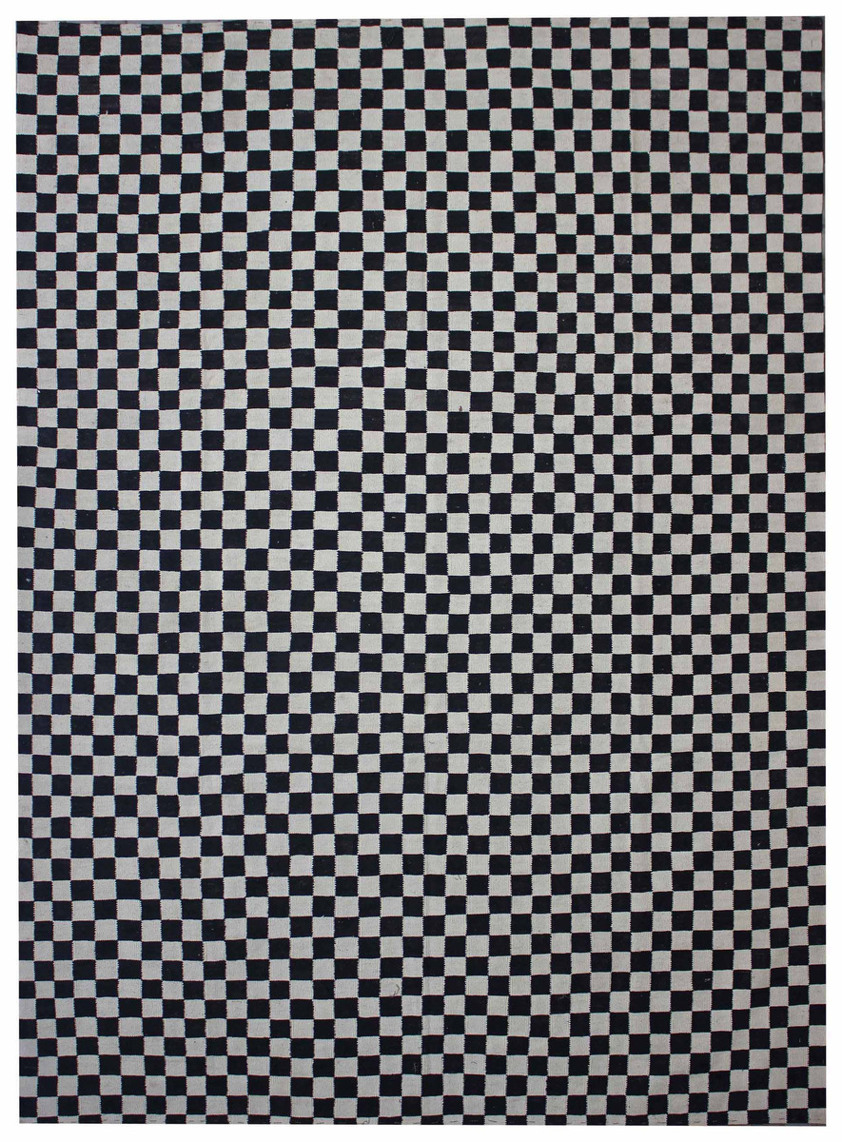
Small black and ivory squares form a continuous chequered field across this rug. The repeat is closely spaced and clearly defined, with occasional slight shifts in alignment giving the geometry a less mechanical appearance. There is no central medallion or separate ornamental border, so the checks remain the whole composition.
The large 262 by 343 centimetre format gives that simple unit considerable presence. This rug could sit beneath a dining table or provide a consistent foundation for a generous seating arrangement. Furniture in broad, plain shapes would offer a useful contrast to the small squares. Warm timber would soften the black, while pale upholstery would connect with the lighter half of the pattern. Afghanistan’s kilim tradition belongs to a broad regional history of flatwoven domestic textiles. Clear divisions of colour allow geometric designs to range from elaborate stepped motifs to very simple repeats.
This contemporary Afghan kilim rug uses the square with particular directness, relying on spacing, contrast and scale for its effect. From across a room, the checks begin to merge into a finely patterned surface. Closer by, each little square becomes distinct again. That change makes this rug adaptable around furniture, since even a small exposed section retains its essential character. It would be most effective in a setting where the black-and-ivory relationship can remain a deliberate part of the room, with the surrounding furnishings providing quieter areas beside the close repeat.