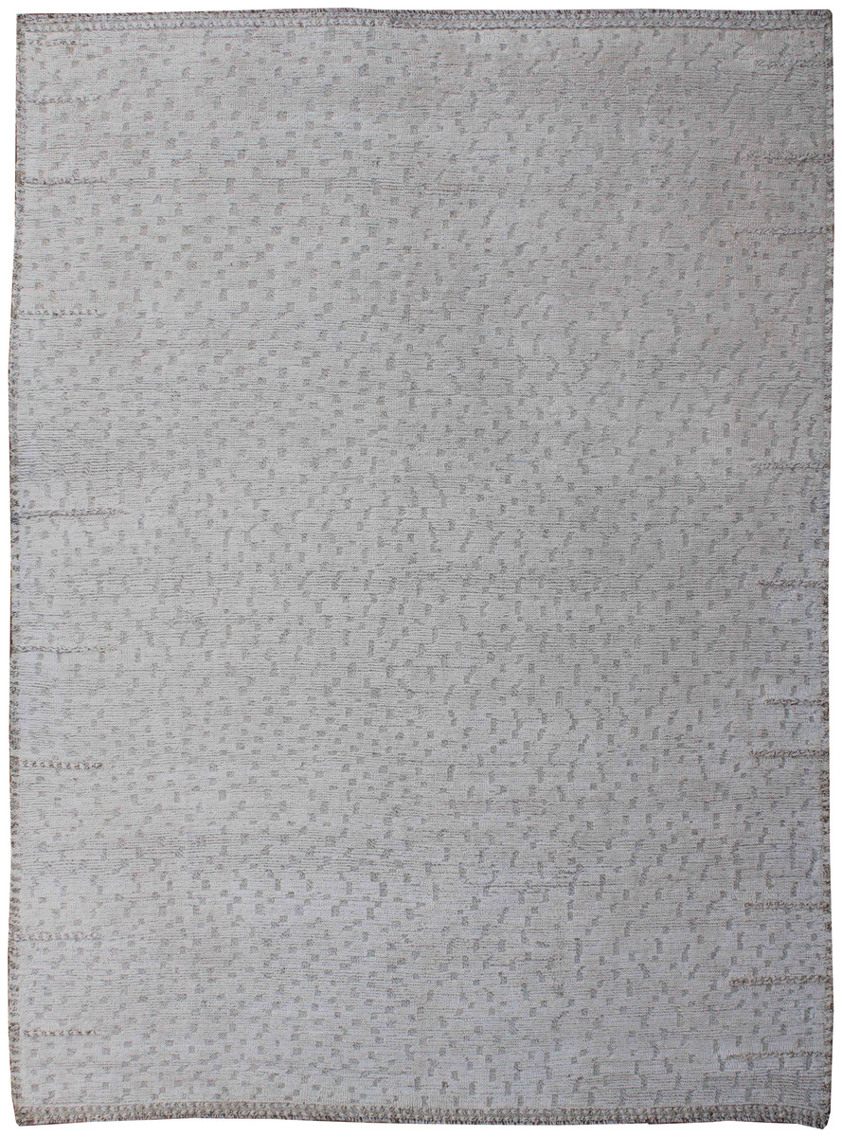
Pale grey is the first impression of this rug, followed by a much quieter layer of fine geometric marks. Small dark strokes and broken linear traces spread across the light field, forming a pattern that is more apparent close by than from across a room. The perimeter is only gently defined, keeping the surface broadly continuous rather than separating it into a bold centre and contrasting frame. T
he Berber style reference relates to the geometric textile traditions of Amazigh communities in North Africa, including the Atlas regions of Morocco. This contemporary Afghan rug takes a restrained approach to that reference, using small tonal details and open light space. Its interest lies in subtle changes of line rather than a large emblem or a strongly coloured repeat.
At 310 × 243 cm, this rug would provide a generous, quiet foundation for a sitting room. It could sit comfortably beside furniture with expressive shapes or strongly textured fabrics, allowing those pieces room to stand out. Dark fittings would bring the tiny grey marks forward, while cream textiles would emphasise the paleness of the ground. The subdued drawing also makes furniture placement relatively flexible. Covering part of the field would leave similar fine details visible elsewhere, without losing a single essential centre. Natural timber would lend warmth to the grey, and a little colour could be introduced through artwork or cushions. This rug would keep the floor composed while retaining enough variation to reward a closer view.