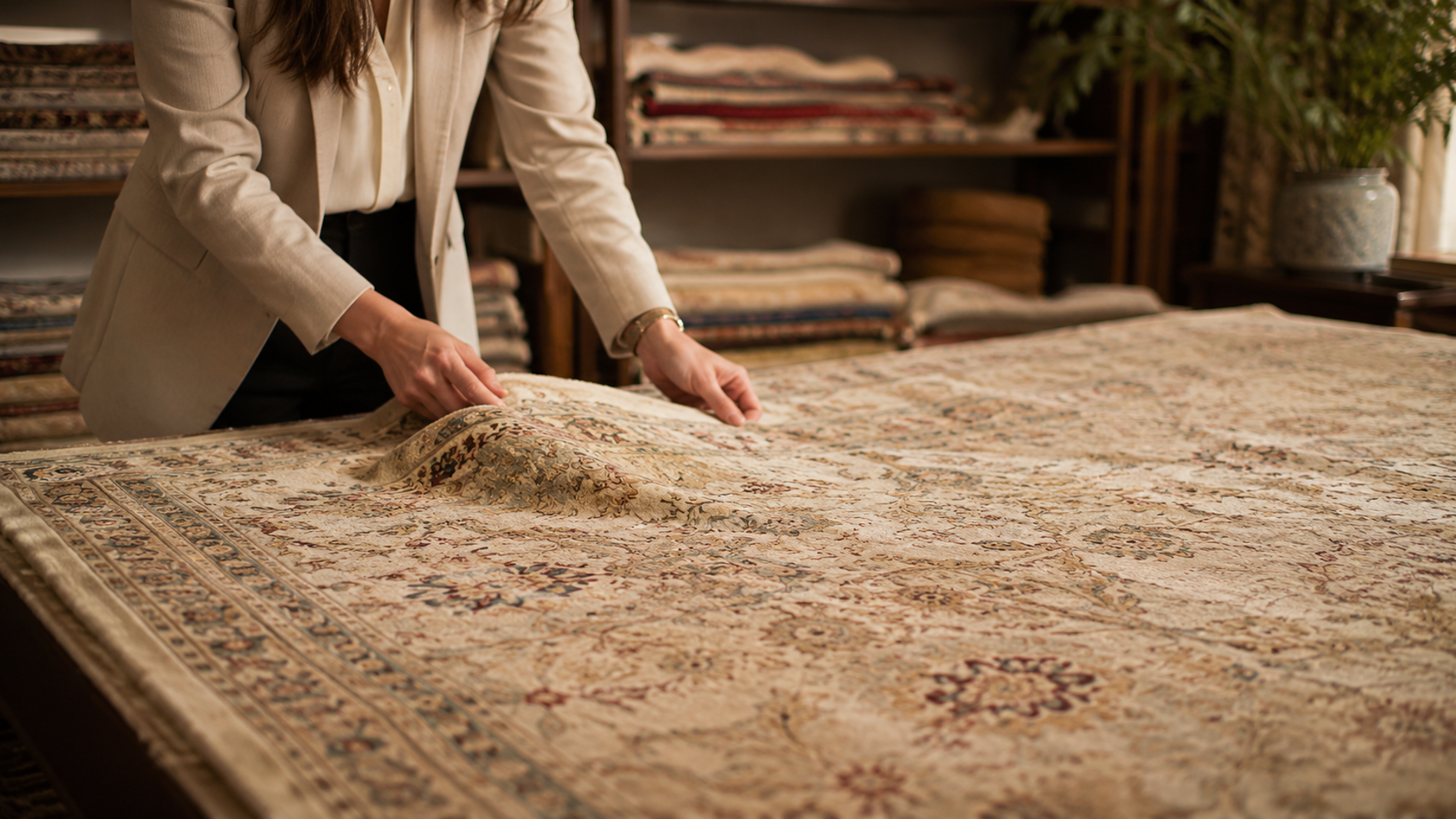
Why Fine Silk Rugs Don’t Always Sell for What Owners Expect
London House Rugs - July 14 2026
A silk rug can be beautifully made, carefully kept and full of history — but in the UK resale market, craftsmanship and demand do not always move together.
There is something undeniably special about a silk rug
The sheen, the detail, the softness of the pile, the way the colours shift in different light — these are not ordinary floor coverings. A finely woven silk rug can take months, sometimes longer, to complete. It may have passed through many skilled hands before finding its way into someone’s home.
For many owners, a silk rug is not just something they bought. It is something they remember buying.
Perhaps it was chosen on a trip many years ago. Perhaps it came from Kashmir, India, or from a specialist dealer closer to home. Perhaps it was bought as a statement piece for the best room in the house. Often, the original receipt is still safely tucked away, showing a price of several thousand pounds from 30 or 40 years ago.
So when the time comes to sell, it is completely understandable that owners expect the rug to have increased in value.
After all, it is handmade. It is silk. It may be beautifully detailed and in excellent condition. In many cases, the owner was even told at the time that the rug would be a good investment.
The reality, particularly in the UK, is more complicated.
At London House Rugs, we regularly hear from people who own fine silk rugs and are surprised to discover that finding a buyer can be difficult — even at a much lower price than they originally paid.
This does not mean the rug is poor quality. In many cases, quite the opposite is true. It simply means that craftsmanship and resale value do not always move together.
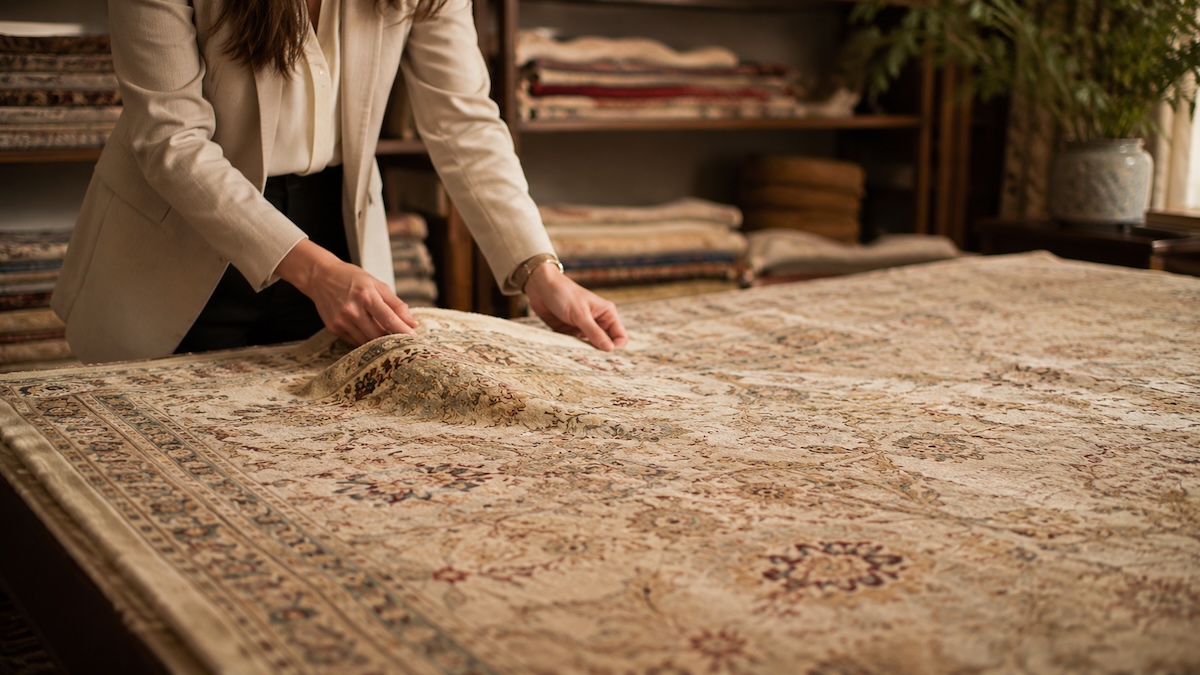
The original price is not the same as today’s value
The resale market works differently.
Silk rugs are admired, but not always used
Interior tastes have changed
Were silk rugs really investments?
This is where expectations can become difficult.
For many years, silk rugs were sometimes sold with the suggestion that they would rise in value. Words such as “investment”, “heirloom” and “collector’s piece” were often used.
In some cases, fine rugs can appreciate. Truly rare antique carpets, exceptional workshop pieces, or rugs with strong provenance can attract serious collectors.
But most silk rugs bought for the home were luxury decorative pieces rather than investment-grade items.
That distinction matters.
A rug can be handmade, expensive and beautiful without having a strong resale market. It can be valuable in terms of workmanship and still not be easy to sell.
This is often disappointing for owners, but it is also useful to understand. It allows the rug to be judged fairly, rather than against a promise made many years ago.
Condition and provenance still matter
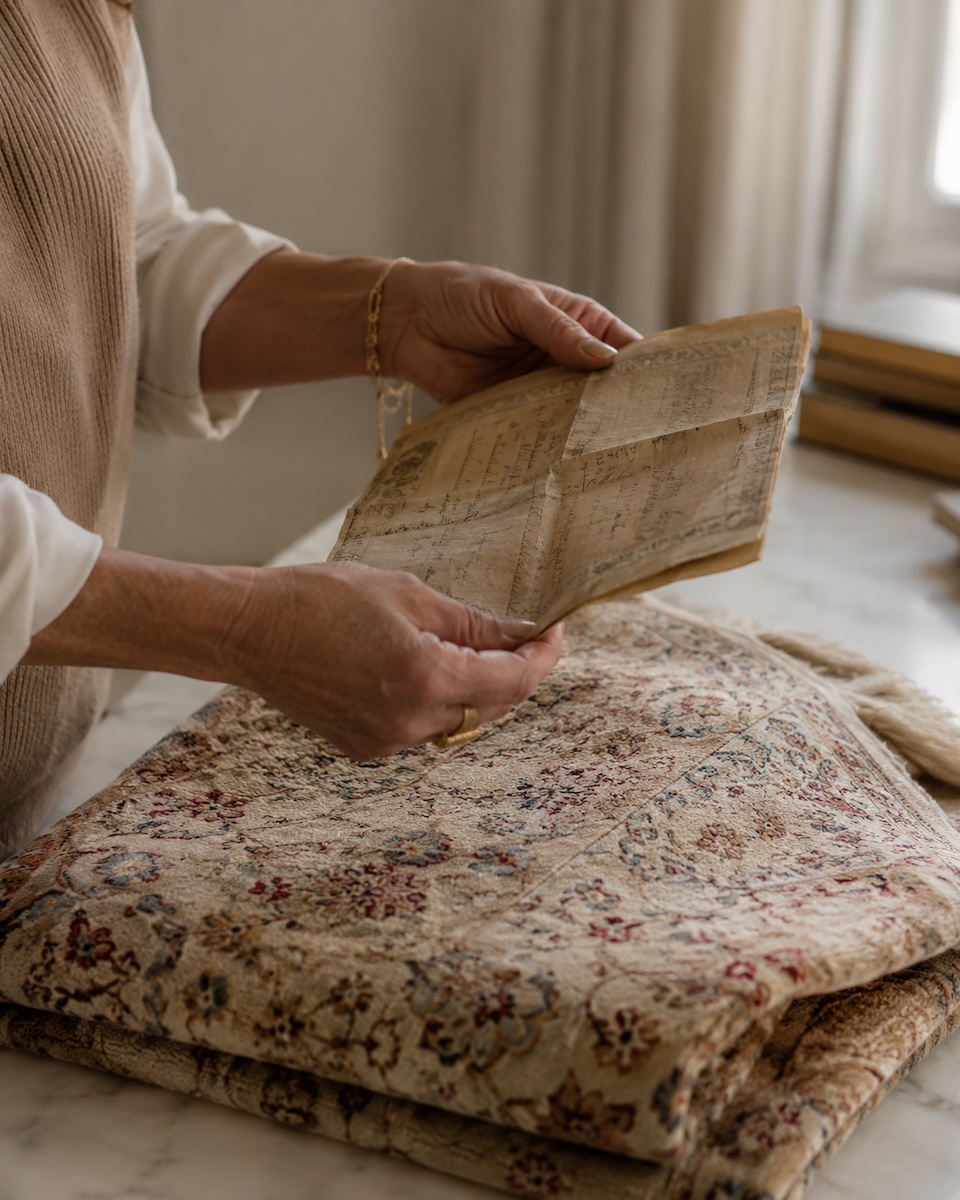
Receipts, certificates and proof of purchase are helpful. So are clear photographs and accurate measurements. They give a clearer picture of the rug and can reassure potential buyers.
Condition is also very important.
Silk shows wear differently from wool. Staining, fading, colour run, fringe damage, pile loss, old repairs or weakness in the foundation can all affect saleability. Even rugs that have been stored away for years may have problems if they have been folded, exposed to damp, or affected by moths.
A silk rug in excellent condition will always have a better chance of selling than one with obvious wear.
But even good condition and good paperwork do not create demand on their own. The rug still needs the right buyer.
A lower resale value does not mean the rug is not special
This is perhaps the most important point.If your silk rug is not worth what you hoped, that does not mean it was a bad purchase. It does not mean it lacks quality. It does not mean it was never worth admiring.
Many silk rugs were bought because they brought beauty into a home. They marked a journey, a memory, a room, or a moment in life. They may have been enjoyed for decades.
That has value, even if it is not the same as resale value.
The difficulty comes when emotional value, original cost and current market value are expected to be the same thing. They rarely are.
A rug can be cherished and still be hard to sell. It can be finely made and still appeal to a small audience. It can be worth keeping, even if it is not worth what the owner was once told it might become.
Our advice if you are thinking of selling
If you own a silk rug and are considering selling it, the best approach is to be realistic, but not discouraged.Gather as much information as you can. Take clear photographs in natural light, including the front, back, fringes, borders and any areas of wear. Measure the rug accurately. Keep any receipts or certificates, as they can help tell the story.
Then seek an honest view of the current market by speaking to a rug expert at London House.
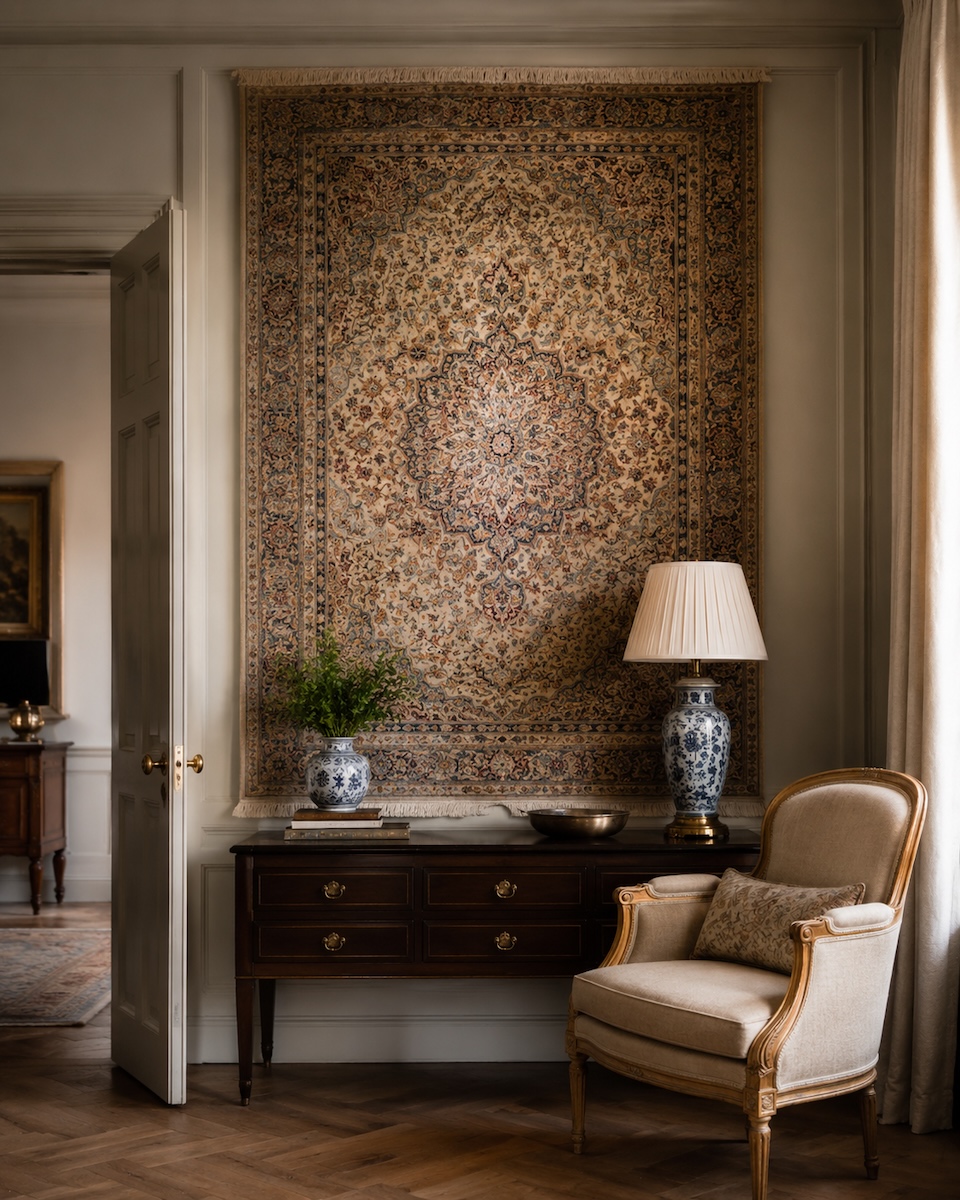
Sometimes the best decision is to sell at a realistic price. Sometimes it may be better to keep the rug and enjoy it in a suitable room. Sometimes a silk rug works beautifully as a wall hanging, where its detail and sheen can be appreciated without the worry of everyday wear.
There is no single answer. It depends on the rug, the condition, the design, and what the owner wants to achieve.
At London House Rugs, we always try to handle these conversations with care. We understand the craftsmanship that goes into fine silk rugs, and we also understand the realities of the UK resale market.
A silk rug may not always be the investment its owner was once told it would be. But it can still be a beautiful piece of handwoven textile art, deserving of the right setting and the right buyer.
Thinking of selling a silk rug?
Through The Rug Exchange, we regularly advise owners who are unsure what their rug is, where it may have come from, or whether it has resale potential.
Send us clear photographs, measurements and any receipts or certificates you have. We will give you an honest view of the current market and let you know whether your rug may be suitable for The Rug Exchange.
Not every silk rug is easy to sell, but every handmade rug has a story — and we are always happy to take a look.