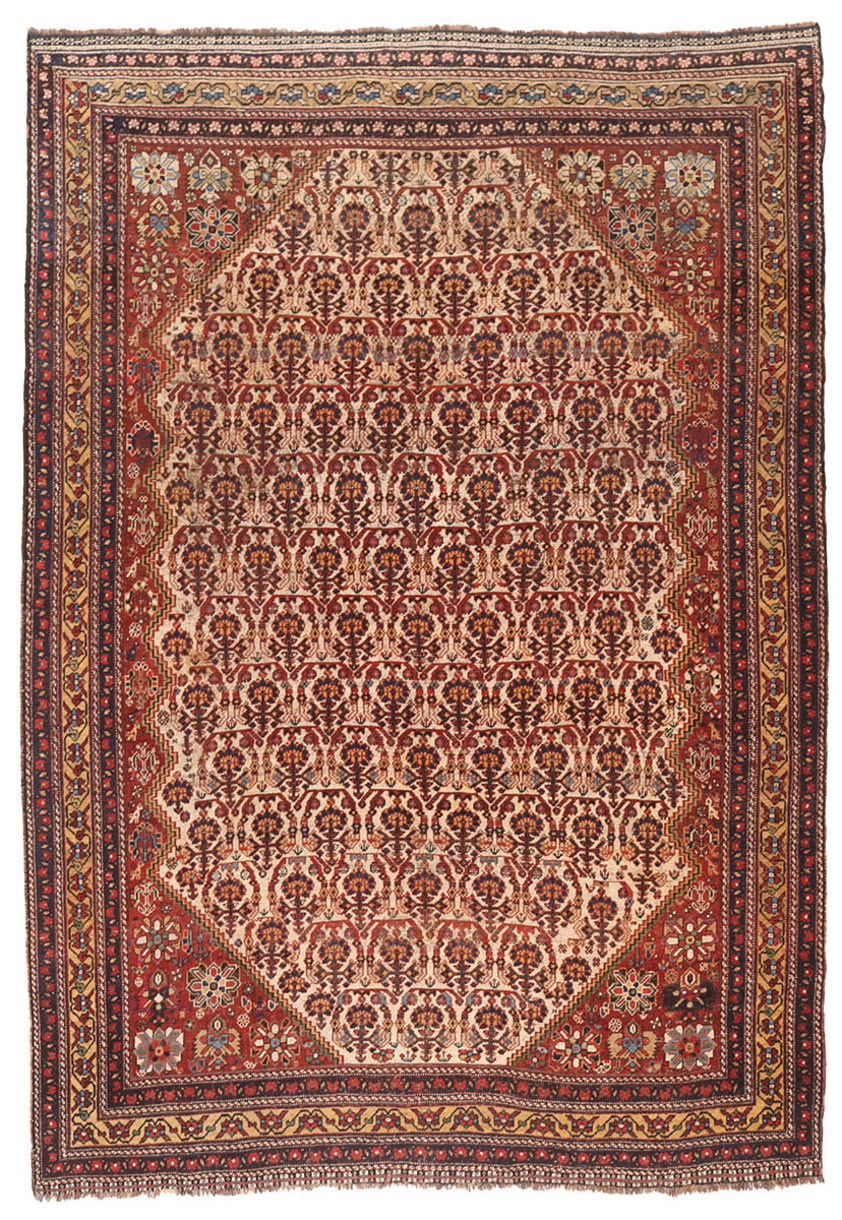
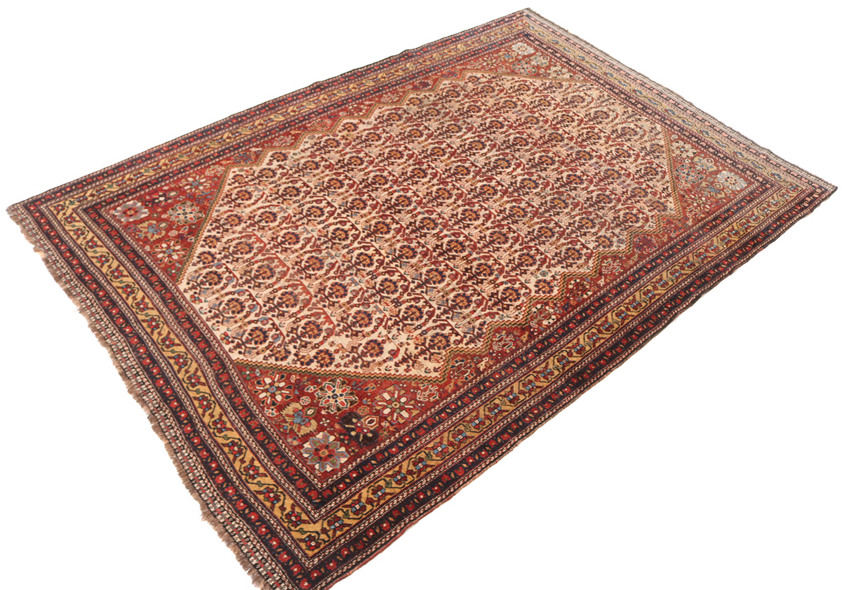
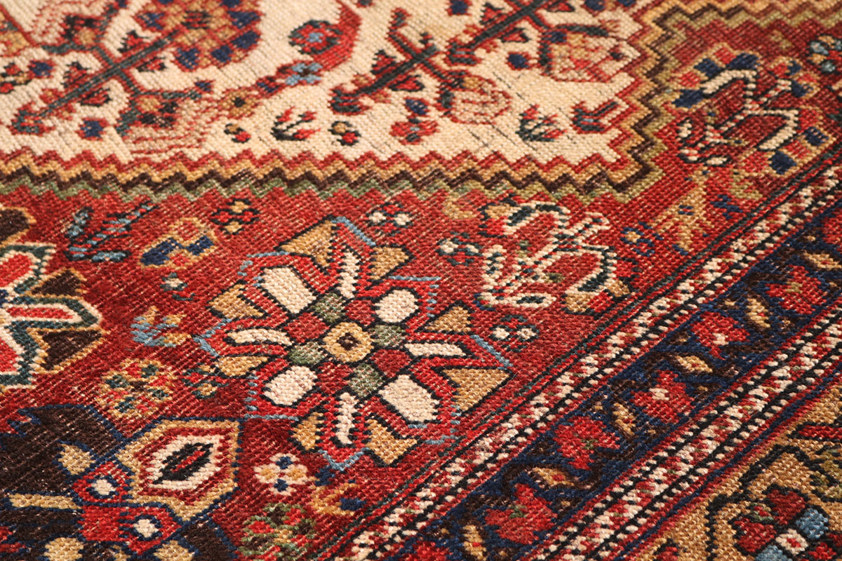
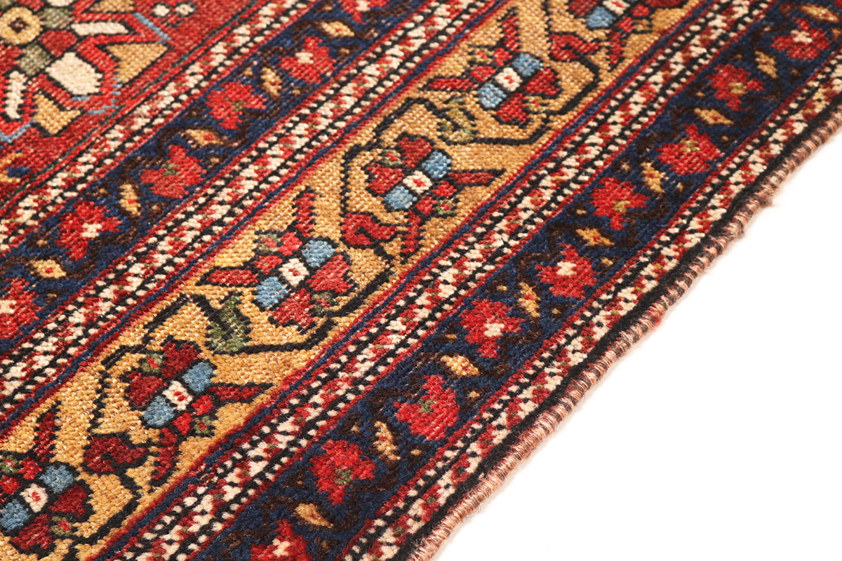
Woven by the nomadic Qashqai tribes of southern Persia in the late 19th to early 20th century, this antique Persian Qashqai rug is a compelling example of tribal craftsmanship at its most accomplished. The composition centres on a densely patterned field arranged in a rhythmic lattice of boteh-inspired motifs, each rendered with remarkable clarity and balance. These repeating forms are framed by stepped spandrels and enclosed within a series of finely articulated borders, creating a sense of order that contrasts beautifully with the innate spontaneity of tribal design.
The colour palette is both rich and enduring, dominated by warm madder reds and softened ivory tones, accented with indigo, ochre, and muted blues. These natural dyes, derived from plants and minerals native to the region, have mellowed gracefully over time, lending the rug a depth and harmony that can only be achieved through age. Woven entirely by hand using hand-spun wool, the pile retains a lively texture and natural sheen, characteristic of Qashqai weaving traditions and prized for both durability and tactile appeal.
Qashqai rugs are celebrated for their robust structure and expressive ornamentation, produced on horizontal looms as tribes migrated seasonally across the Zagros Mountains. This example reflects that heritage clearly, combining practical resilience with a strong visual identity. Its balanced proportions and intricate detailing make it particularly versatile, suited to both traditional interiors and more contemporary settings where a sense of history and authenticity is desired.
An authentic antique Persian Qashqai rug such as this is not merely a decorative element, but a woven document of nomadic life, cultural symbolism, and enduring craftsmanship. It offers a refined yet characterful presence, ideal for collectors and interior designers seeking a piece with genuine provenance and timeless appeal.