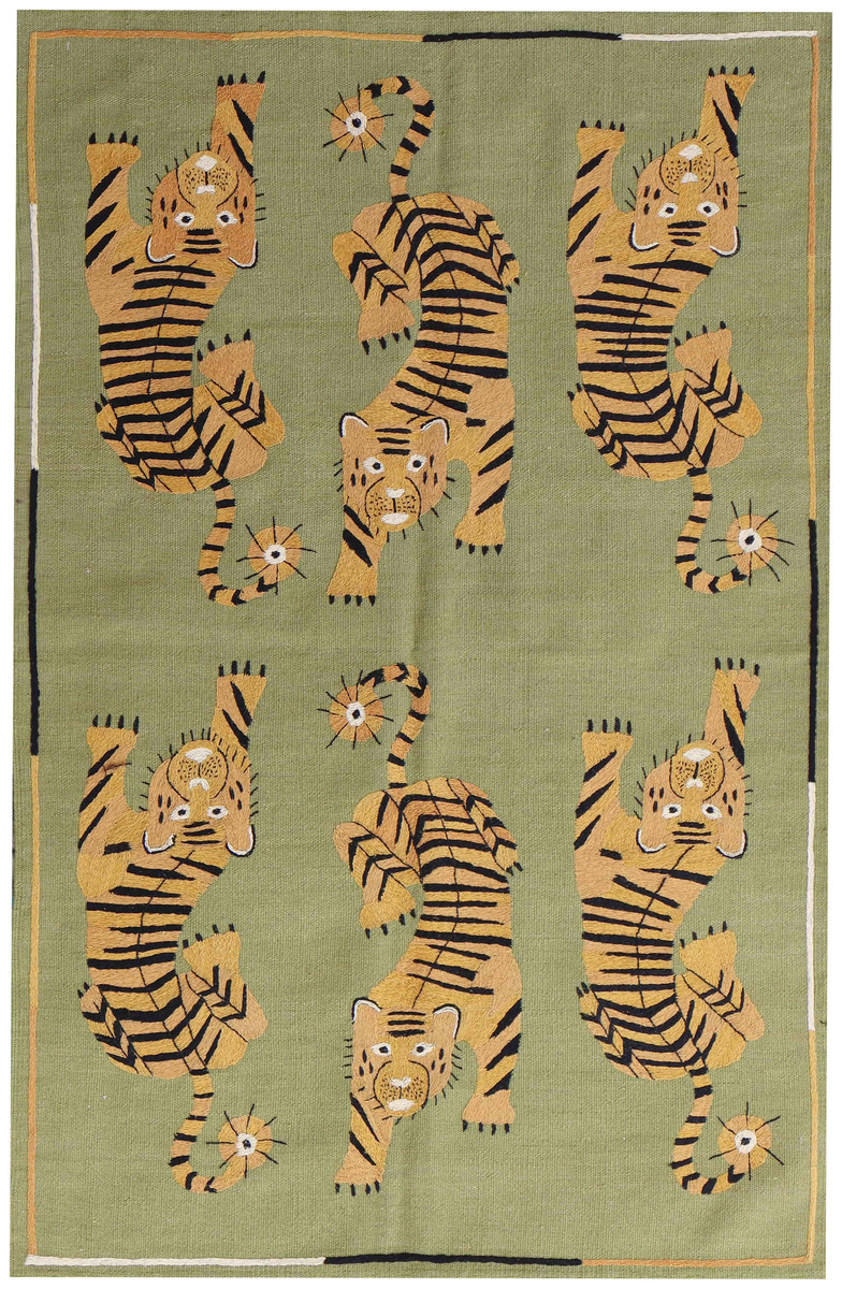
Broad golden tigers fill much of the green field in this rug. Six figures occupy two rows, with the central animals inverted to interrupt the direction of those beside them. Black stripes sweep around their bodies, and pale facial details create smaller points of interest within the larger gold shapes. Curled tails and raised forelegs keep the silhouettes animated even within the orderly repeat.
The olive background separates the figures clearly. Its fine tonal variation gives the broad areas a softer visual texture, while the dark stripes maintain their graphic clarity. A slender light frame marks the perimeter, changing colour in places without becoming a separate ornamental band. This balance lets the animals remain the main subject while giving their arrangement a definite boundary.
The historical suzani tradition concerns embroidered household furnishings from Central Asia. Covers and hangings provided extensive surfaces for recurring forms and finely worked detail. Contemporary Afghan kilims bearing the name can develop that decorative context through pictorial subjects such as this tiger repeat. The relationship is one of ornamental approach, without requiring a specific symbolic meaning for the animal or an unverified account of surface embroidery. Use it where the larger figures can remain substantially visible. A room with plain seating and natural timber would allow the black and gold drawing to register clearly. Green accessories could connect with the field, while cream fabric would provide a lighter interval around the more densely patterned bodies.