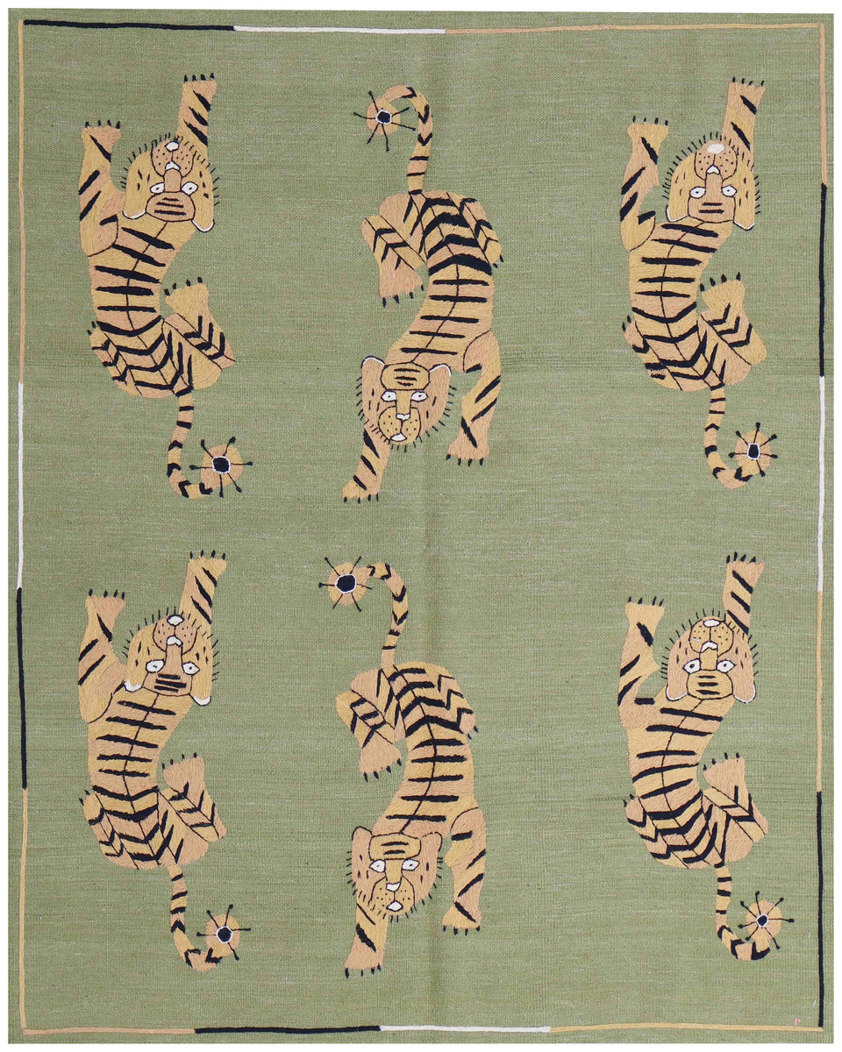
Generous green intervals give the tiger repeat of this rug a measured, open character. Six gold figures stand in two rows, with each central animal inverted against its neighbours. Raised forelegs and long curling tails extend into the olive field. Dark stripes follow the bodies, while pale outlines around the faces add detail within the larger silhouettes. The border is a thin line of changing colour, with pale, gold and dark sections defining the edge. Its restraint allows the broad field to remain the principal setting for the animals.
Fine tonal variations are visible across the green, lending a softer visual texture beneath the emphatic drawing. The contrast between large open areas and smaller striped details makes the pattern effective at different distances. Central Asian suzani textiles were historically embroidered domestic furnishings, used as covers, hangings and other ornamental household pieces. Their broad surfaces provided room for recurring motifs and subsidiary detail. This Afghan kilim interprets that decorative idea through a pictorial animal repeat.
The name gives cultural background, while the visible arrangement is best understood through scale, spacing and direction rather than an unverified symbolic explanation. It could bring warmth to a room containing cream fabric and dark wooden furniture. Olive accessories would connect with the ground, while a little ochre could echo the figures. Leave the central reversals visible around any table, maintaining the two-row structure that gives the otherwise lively animals a clear sense of order.