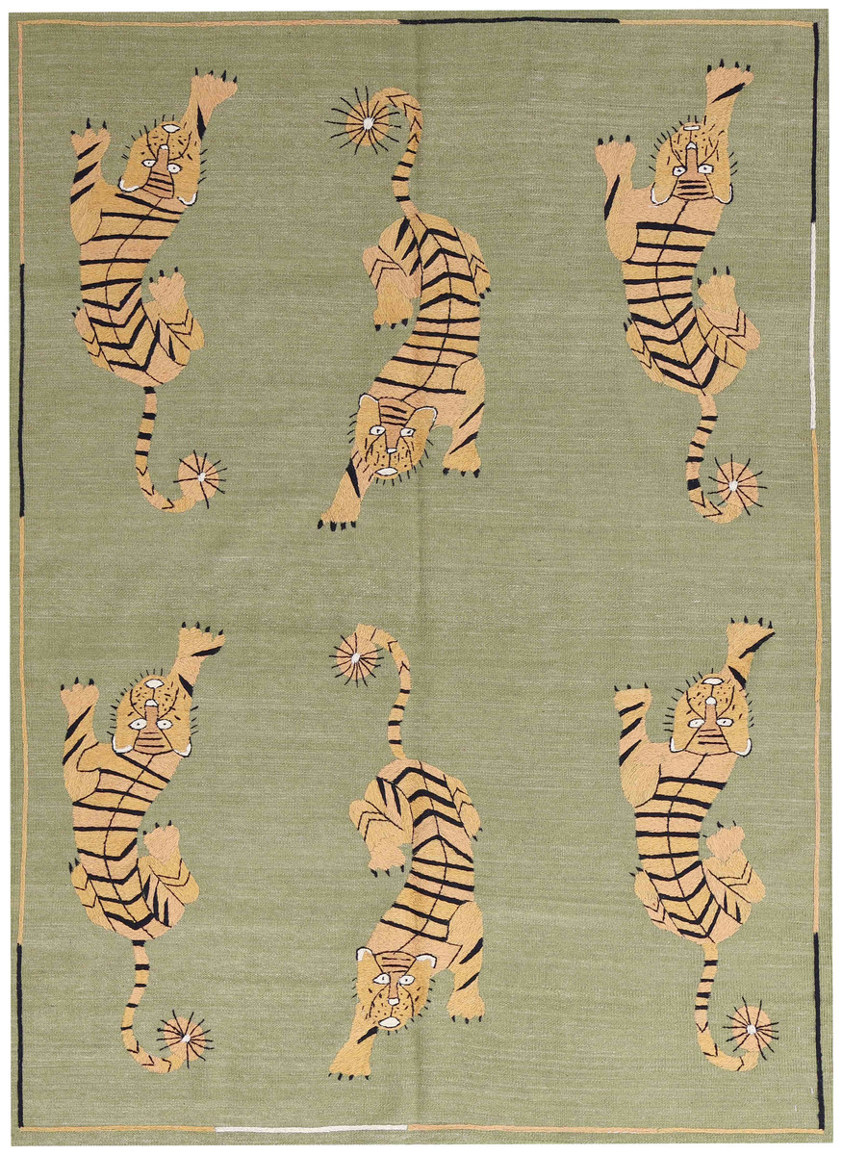
Curling tails and raised forelegs give the tigers in this rug their animated character. Six golden figures stand against olive green, their bodies divided by fine dark stripes. In each row, the central tiger is inverted, making the repeat more varied than a simple procession. Pale facial details and small radiating tail ends provide close points of interest within the larger silhouettes.
The animals are widely separated, allowing the green background to remain an active part of the design. A slender edge line shifts between pale and dark sections, giving the field a light enclosure. Subtle horizontal changes of tone are visible in the ground, adding a quieter texture beneath the bold subject. From farther away the gold forms establish a clear rhythm; nearby, the faces and stripe patterns become more prominent. The suzani name has a historical connection with embroidered domestic covers and hangings from Central Asia. Contemporary Afghan kilims can adapt that ornamental context into new pictorial arrangements, including repeated animals.
This example uses motif spacing and alternating direction to organise its broad field. The textile reference gives background to the name, but it does not establish a particular stitching technique or a verified symbolic role for the tiger. It could bring both warmth and pattern to a room of plain upholstered pieces. Cream fabric would lighten the surrounding scheme, while dark wood could relate to the stripes. Keep the furnishings open enough for several complete figures to remain visible across the floor.