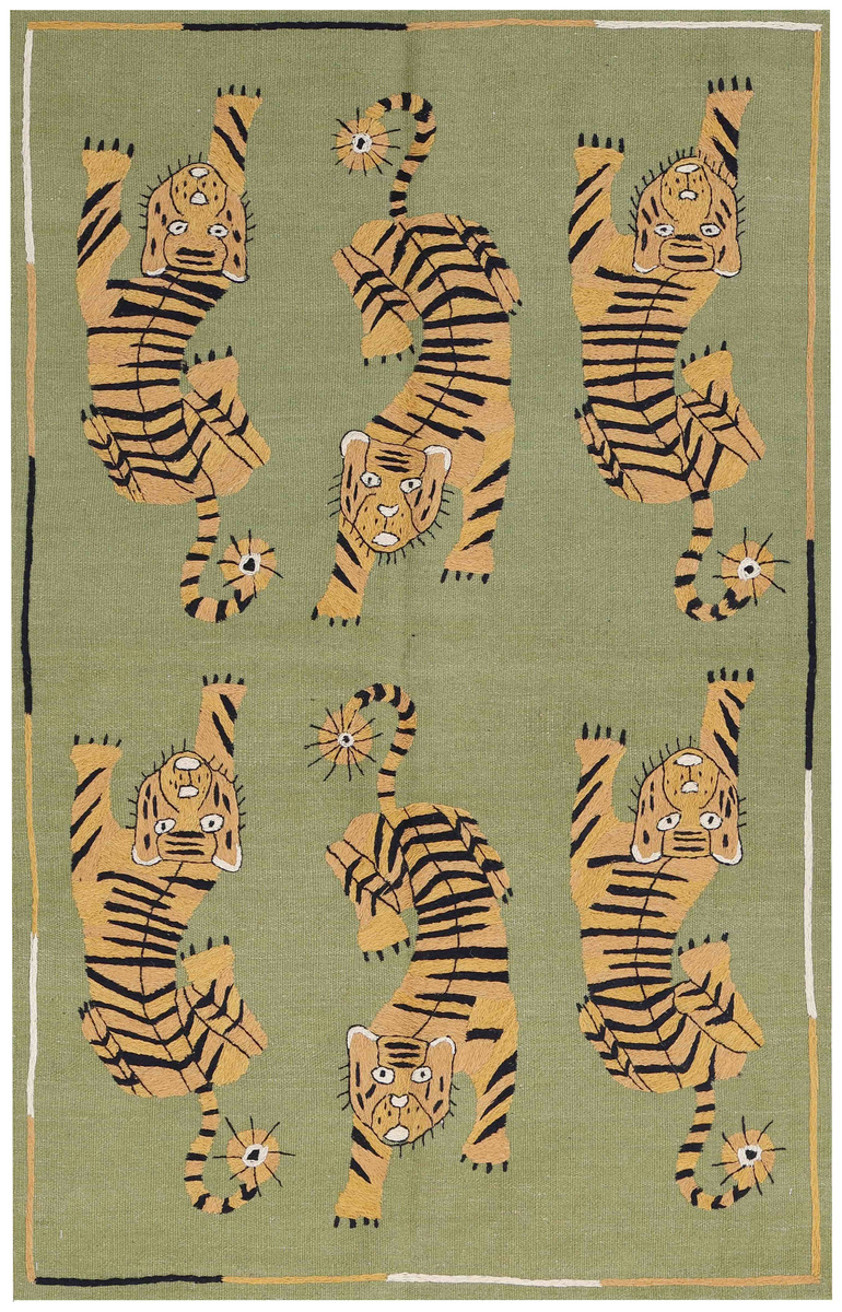
Gold and black give the tigers in this rug a strong graphic presence against olive green. Six figures are arranged in two rows, with the middle animal of each group reversed. Their raised paws, broad striped bodies and long curling tails create an energetic pattern within an otherwise quiet field. Pale details around the eyes and muzzle bring a smaller, more intricate scale to the faces.
A fine perimeter line changes between light, ochre and dark sections. It marks the edge without introducing another large motif, leaving the animals to establish the rug's main rhythm. Green space around the bodies is generous enough for their outstretched shapes to remain separate. The background's subtle tonal variation gives the surface a softly textured appearance beneath the emphatic silhouettes. Suzani belongs historically to the embroidered furnishing traditions of Central Asia. Covers and hangings offered broad areas for repeated ornament, and the name has since been used in contemporary rug descriptions with more varied imagery.
This Afghan kilim uses a pictorial tiger repeat within that decorative context. Its pattern does not, on its own, establish a special symbolic reading or a documented surface stitching technique. The rug would work with warm timber, pale walls and a restrained selection of fabrics. A dark green chair could echo the ground, while a small ochre object would pick up the gold. Keep the central row changes visible around any table so the alternating directions remain part of the composition.