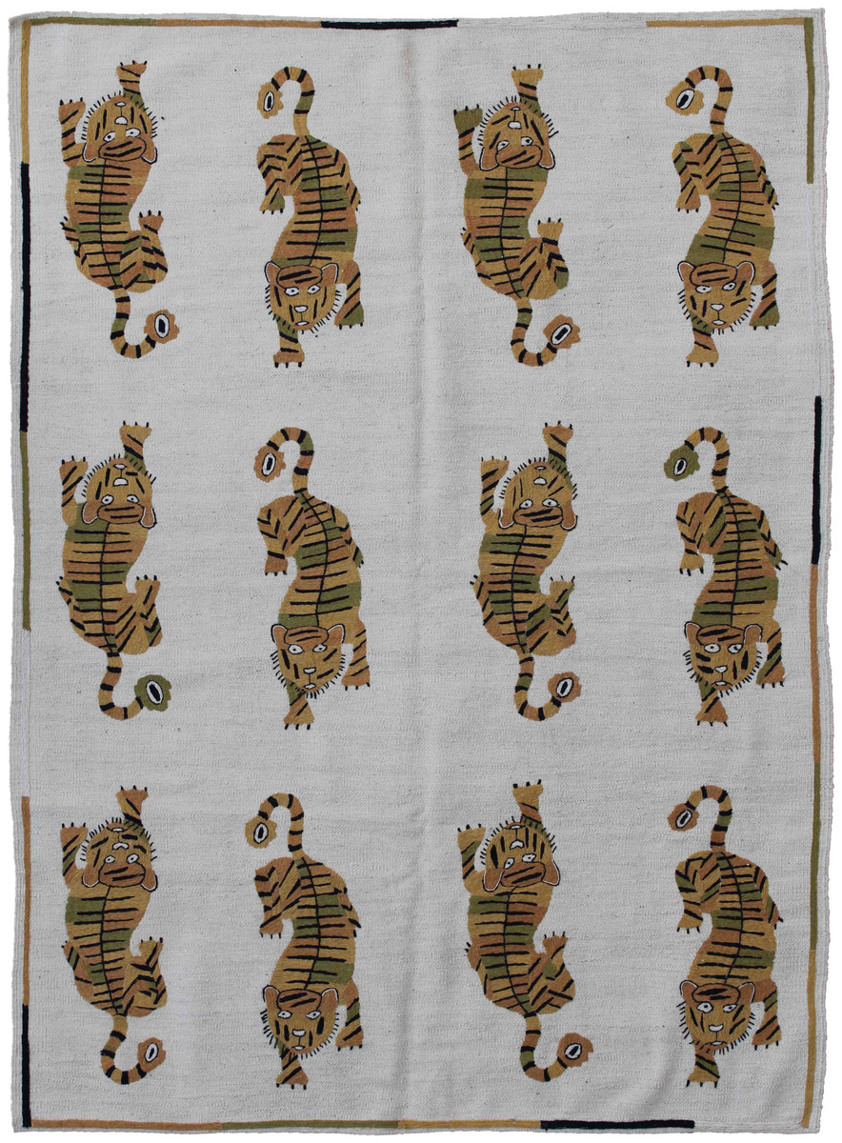
Alternating striped cats form three rows across this rug. Their ochre bodies face in opposing directions, with some figures inverted beside their upright neighbours. Curled tails repeat the same dark bands as the bodies. Small pointed ears and fine facial marks give the cats a more detailed character when viewed nearby. A slender dark-and-warm-coloured line contains the otherwise open pale ground.
The arrangement is regular enough to be read clearly, but the individual outlines have small differences. Ochre varies slightly in tone, and the dark stripes change length as they follow the rounded forms. The historical Suzani tradition belongs to Central Asian household needlework, especially the embroidered furnishings of Uzbek communities.
This Afghan kilim gives that decorative association an unusually concentrated pictorial treatment, using one subject and a limited palette to create interest through repetition, spacing and changing direction. At 241 × 176 cm, this rug could work beside a small seating group or within a bedroom where the rows can remain apparent. Plain upholstery would provide a quiet setting for the figures. Warm timber would connect with the ochre, while a dark object could refer to the stripes. The pale spaces between the cats are an important part of the composition, allowing their tails and little faces to stay distinct. Slender table legs would preserve glimpses of the cats and the pale gaps between them.