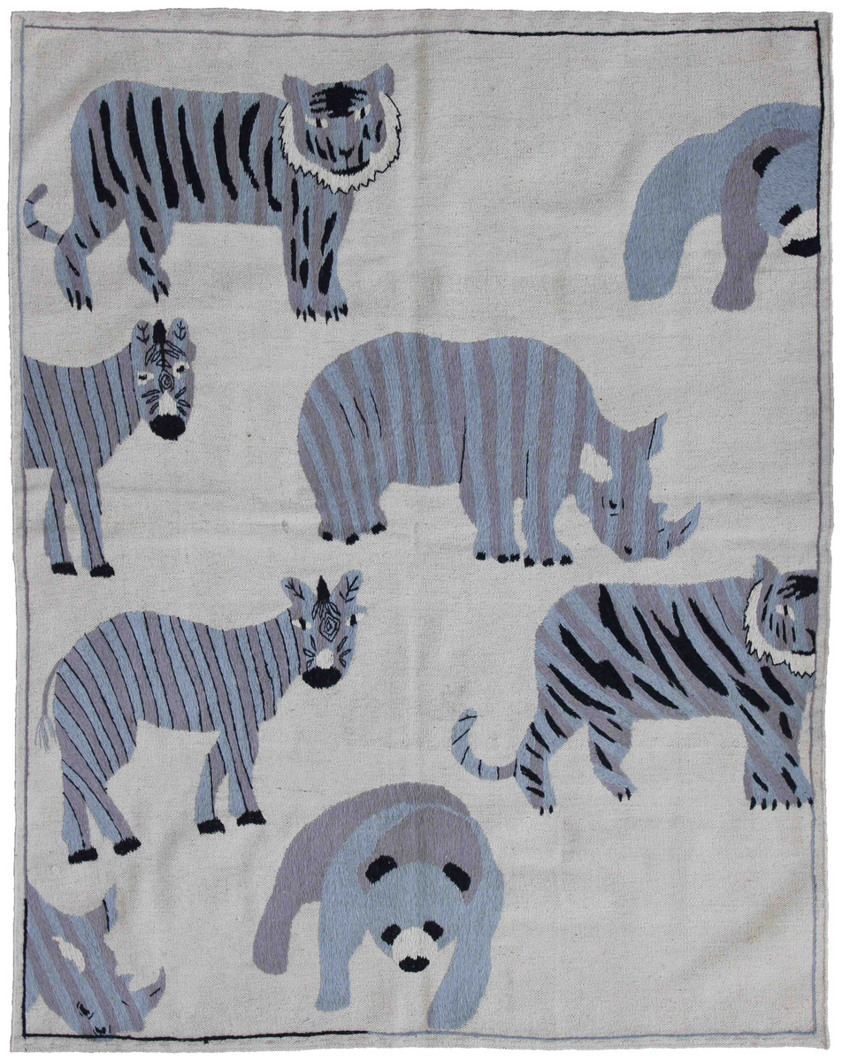
Large blue-grey animal figures fill the pale field of this rug. Striped cat-like forms, zebra-like animals and a broad horned figure appear beside rounder bear-like shapes. Some subjects enter from the edges and are only partly shown. Dark stripes and fine facial details give definition within the otherwise restrained palette, while the ground remains open around the larger silhouettes.
A small reading corner would give this 197 × 156 cm rug’s larger animals a clear position within a modest room. Plain grey fabrics would connect with the figures, and pale wood would relate to the ground. A dark accessory could answer the stronger stripes. The larger animals would remain apparent across the room, while the little changes around their faces would reward a closer view. Keeping most of the field exposed would preserve the interplay between complete figures and those cropped by the edge. The figures have an imaginative, simplified drawing. Rounded bodies sit beside straighter legs, long stripes and compact heads, making changes of shape more important than numerous different colours.
Suzani is historically associated with Central Asian household embroidery, particularly in Uzbek communities and neighbouring areas. Its decorative repertoire includes pictorial subjects alongside formal botanical schemes. This Afghan kilim takes the animal motif in a bold direction, enlarging a few recognisable forms and allowing their placement across the light field to supply the pattern.