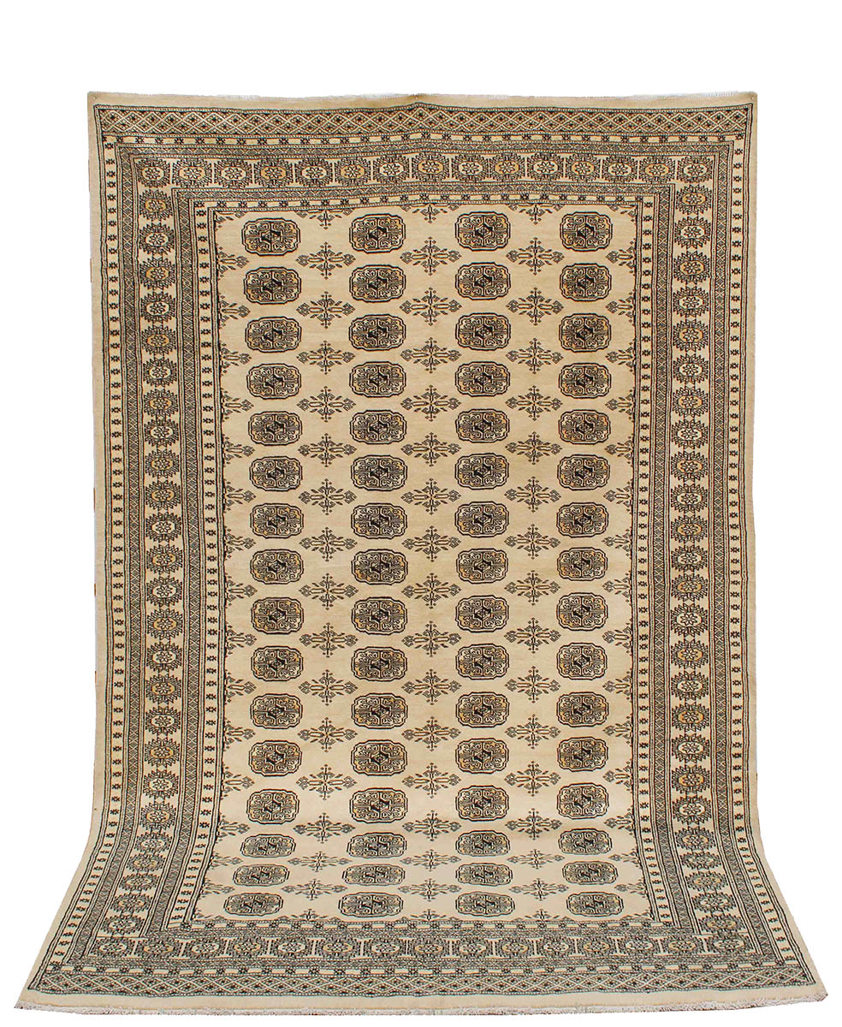
Four orderly columns of oval guls establish the measured pace of this Afghan Bokhara rug. The motifs combine olive, brown and charcoal details against a warm cream field, with small star-like devices occupying the gaps. Each oval contains a miniature geometric arrangement, so the design offers a second level of detail inside its straightforward repeat. The surrounding borders echo the same palette through rows of small roundels and narrow patterned guards.
Cream is important to the composition. It opens the spaces around the guls and allows their dark outlines to remain distinct from one another. The borders are more densely worked than the field, creating a gradual transition towards the edge. A few warmer ochre notes soften the olive and charcoal, giving this rug an earthy rather than austere appearance. In rug terminology, Bokhara refers to a pattern tradition associated with Turkmen guls and the historic Central Asian carpet trade. The commercial name derives from Bukhara, but it is used for rugs made beyond that city, including Afghan examples such as this one. Guls have been interpreted in many forms and arrangements, rather than following a single universal template.
Measuring 242 × 173 cm, this rug would make a balanced centrepiece for a study or a compact sitting room. Its regular pattern can accommodate furniture placed over part of the field without losing the overall composition. Olive fabric, cream walls and darker wooden furniture would give particular emphasis to the quiet richness of its colours.